Assamese Culture: A Timeless Heritage of Tradition, Festivals, Art, and Unity
Introduction
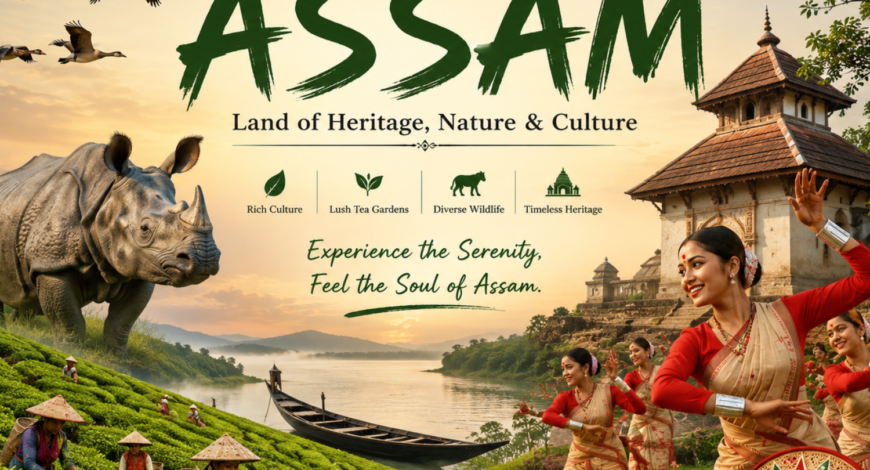
Assam, often referred to as the gateway to Northeast India, is a land of breathtaking natural beauty, diverse ethnic communities, vibrant festivals, and a rich cultural heritage that has evolved over centuries. Assamese culture is a harmonious blend of indigenous traditions, ancient customs, spirituality, literature, music, dance, craftsmanship, and hospitality. It reflects the values of unity, respect for nature, and communal harmony that continue to define the identity of the Assamese people.
From the rhythmic beats of the Dhol during Bihu celebrations to the intricate artistry of Muga silk weaving, Assamese culture represents a living tradition that continues to inspire generations. It is a culture deeply rooted in history while embracing modernity with pride.
The Historical Foundation of Assamese Culture
Assam has a glorious history dating back thousands of years. The region has been influenced by various indigenous tribes, kingdoms, and civilizations, including the Ahom dynasty, which ruled Assam for nearly six centuries. The Ahoms played a significant role in preserving Assamese identity, administration, architecture, and cultural development.
Over time, Assamese culture absorbed influences from different communities while maintaining its unique traditions. This cultural diversity has made Assam one of India’s most fascinating states.
Today, Assamese culture reflects contributions from numerous ethnic groups, including the Bodos, Mishings, Karbis, Dimasas, Rabhas, Tiwas, Deoris, Sonowal Kacharis, and many others, all living together in harmony.
Bihu: The Heartbeat of Assam
No discussion of Assamese culture is complete without mentioning Bihu, the state’s most celebrated festival. Bihu is not merely a festival—it is an emotion that connects every Assamese household.
There are three major Bihus celebrated throughout the year:
Rongali Bihu
Celebrated in April, Rongali Bihu marks the Assamese New Year and the beginning of the agricultural season. It is filled with music, dance, traditional games, delicious food, and community gatherings.
Bhogali Bihu
Observed in January after the harvest season, Bhogali Bihu is known for community feasts, bonfires (Meji), traditional games, and celebrations of abundance.
Kongali Bihu
Celebrated in October, Kongali Bihu reflects simplicity and prayers for a prosperous harvest. Unlike the festive atmosphere of Rongali and Bhogali, it emphasizes spirituality and hope.
Bihu beautifully represents Assam’s agricultural roots and the deep bond between people and nature.
Assamese Traditional Attire
Traditional Assamese clothing is admired for its elegance and craftsmanship.
Mekhela Chador
The Mekhela Chador is the traditional attire worn by Assamese women. It is woven with exquisite designs and often made from Muga, Pat, or Eri silk.
Gamosa
The Gamosa is one of Assam’s most respected cultural symbols. It represents honor, respect, hospitality, and identity. It is gifted during ceremonies, religious functions, and cultural events.
Traditional Men’s Attire
Men traditionally wear dhoti, kurta, and a Gamosa around the neck or head during festivals and important occasions.
These garments reflect Assam’s rich textile heritage and skilled handloom tradition.
Assamese Cuisine: A Celebration of Simplicity
Assamese cuisine is known for its fresh ingredients, mild spices, and unique flavors.
Popular dishes include:
- Khar
- Masor Tenga
- Duck Curry
- Bamboo Shoot Preparations
- Pitha
- Jolpan
- Laru
- Xaak
- Fish cooked in banana leaves
Rice remains the staple food, accompanied by vegetables, fish, meat, and traditional pickles.
The cuisine reflects Assam’s agricultural richness and close connection with nature.
Music and Dance
Music plays an essential role in Assamese culture.
Bihu Dance
Performed during Rongali Bihu, Bihu dance symbolizes joy, youth, love, and celebration. The energetic movements are accompanied by traditional instruments like:
- Dhol
- Pepa
- Gogona
- Taal
- Toka
Sattriya Dance
Recognized as one of India’s eight classical dance forms, Sattriya originated in Assam’s Vaishnavite monasteries (Satras). It combines spirituality, storytelling, and graceful movements.
Traditional folk songs, devotional music, and modern Assamese music continue to enrich the state’s cultural landscape.
Literature and Language
The Assamese language has one of the richest literary traditions in India.
Assam has produced numerous renowned poets, novelists, playwrights, and scholars whose works have contributed immensely to Indian literature.
Assamese literature explores themes of:
- Nature
- Society
- Spirituality
- History
- Love
- Human values
- Cultural identity
Modern authors continue to preserve and promote Assamese literature by publishing novels, poetry, research works, biographies, and historical studies that inspire readers across generations.
Handloom and Handicrafts
Assam is internationally famous for its handloom industry.
The state produces:
- Muga Silk
- Eri Silk
- Pat Silk
These luxurious fabrics are woven by skilled artisans using traditional techniques passed down through generations.
Apart from textiles, Assam is also known for:
- Bamboo crafts
- Cane furniture
- Bell metal works
- Pottery
- Wooden handicrafts
These crafts not only preserve cultural traditions but also provide livelihoods to thousands of artisans.
Spiritual Heritage
Religion has significantly influenced Assamese culture while promoting harmony and inclusiveness.
The teachings of Srimanta Sankardeva transformed Assamese society through the Neo-Vaishnavite movement, emphasizing devotion, equality, art, literature, and community service.
The Satras established by Sankardeva continue to serve as centers of:
- Spiritual education
- Classical dance
- Music
- Literature
- Social reform
Assam is also home to revered pilgrimage sites such as Kamakhya Temple, Umananda Temple, and numerous ancient monasteries that attract devotees from across the country.
Wildlife and Natural Beauty
Nature is deeply woven into Assamese culture.
The state is blessed with:
- Kaziranga National Park
- Manas National Park
- Dibru-Saikhowa National Park
- Majuli Island
- Brahmaputra River
These natural treasures have influenced Assamese folklore, songs, literature, and festivals for centuries.
Wildlife conservation and environmental respect remain important aspects of Assamese tradition.
Unity in Diversity
One of the greatest strengths of Assamese culture is its diversity.
People from various ethnic communities, religions, and linguistic backgrounds celebrate each other’s festivals, traditions, and customs with mutual respect.
This spirit of inclusiveness has helped Assam preserve its cultural richness while fostering social harmony.
Preserving Assamese Culture in the Modern Era
Globalization has brought new opportunities and challenges.
Today, cultural preservation requires collective efforts through:
- Promoting Assamese literature
- Supporting local artisans
- Encouraging traditional music and dance
- Preserving indigenous languages
- Teaching cultural values to younger generations
- Digitizing historical documents
- Promoting cultural tourism
Educational institutions, writers, artists, and cultural organizations continue to play an essential role in safeguarding Assam’s heritage.
Conclusion
Assamese culture is a beautiful reflection of history, tradition, creativity, and resilience. Its festivals, literature, music, dance, cuisine, handloom, spiritual heritage, and warm hospitality make it one of India’s richest cultural traditions.
As the world becomes increasingly connected, preserving Assamese culture becomes even more important. By celebrating our traditions, supporting local artists, promoting Assamese literature, and passing cultural values to future generations, we ensure that this remarkable heritage continues to thrive.
Assam is not merely a place on the map—it is a vibrant cultural identity where tradition meets progress, diversity creates unity, and every festival, song, and story reflects the soul of its people.
Women Empowerment: Building an Equal Future